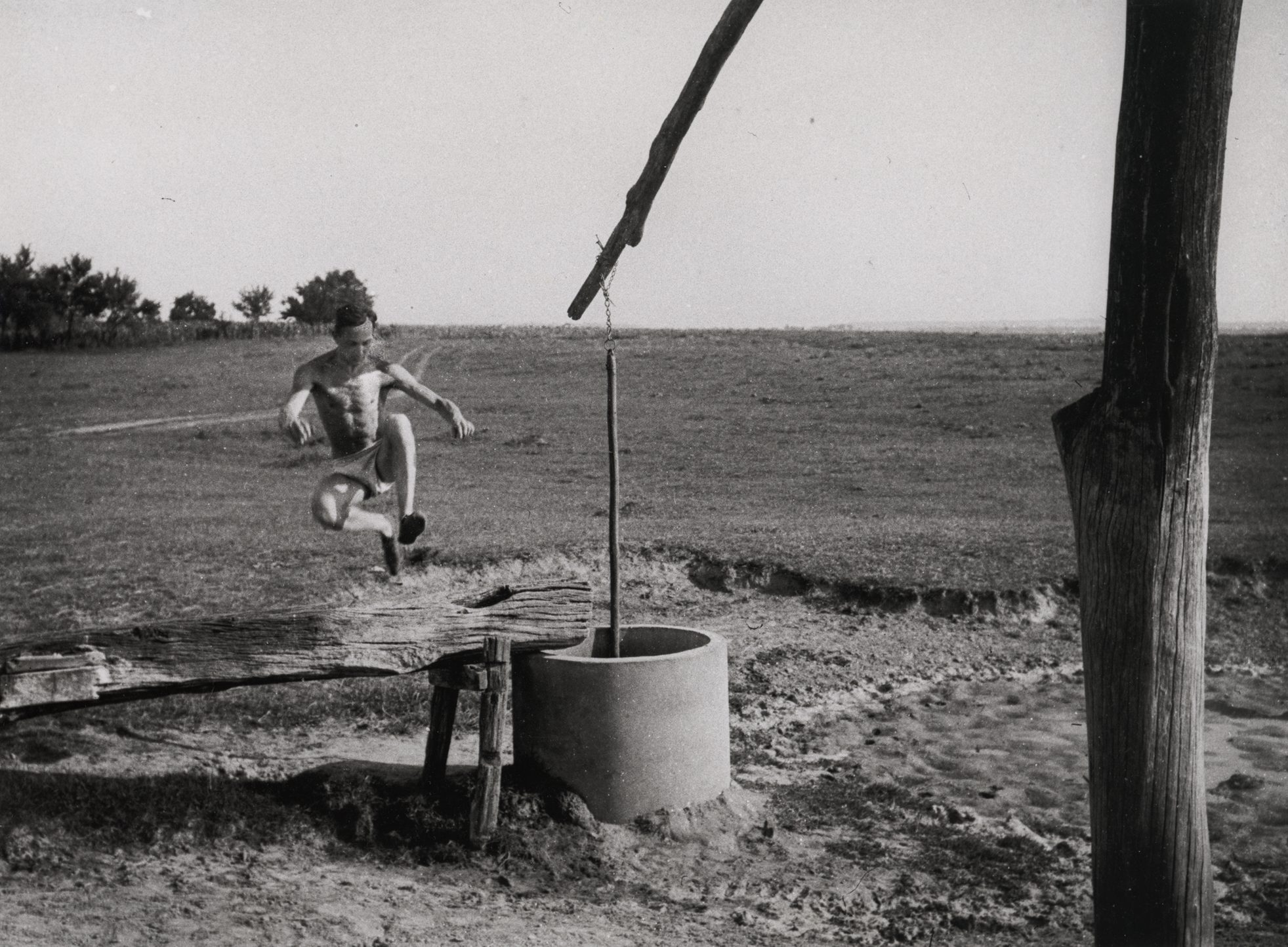
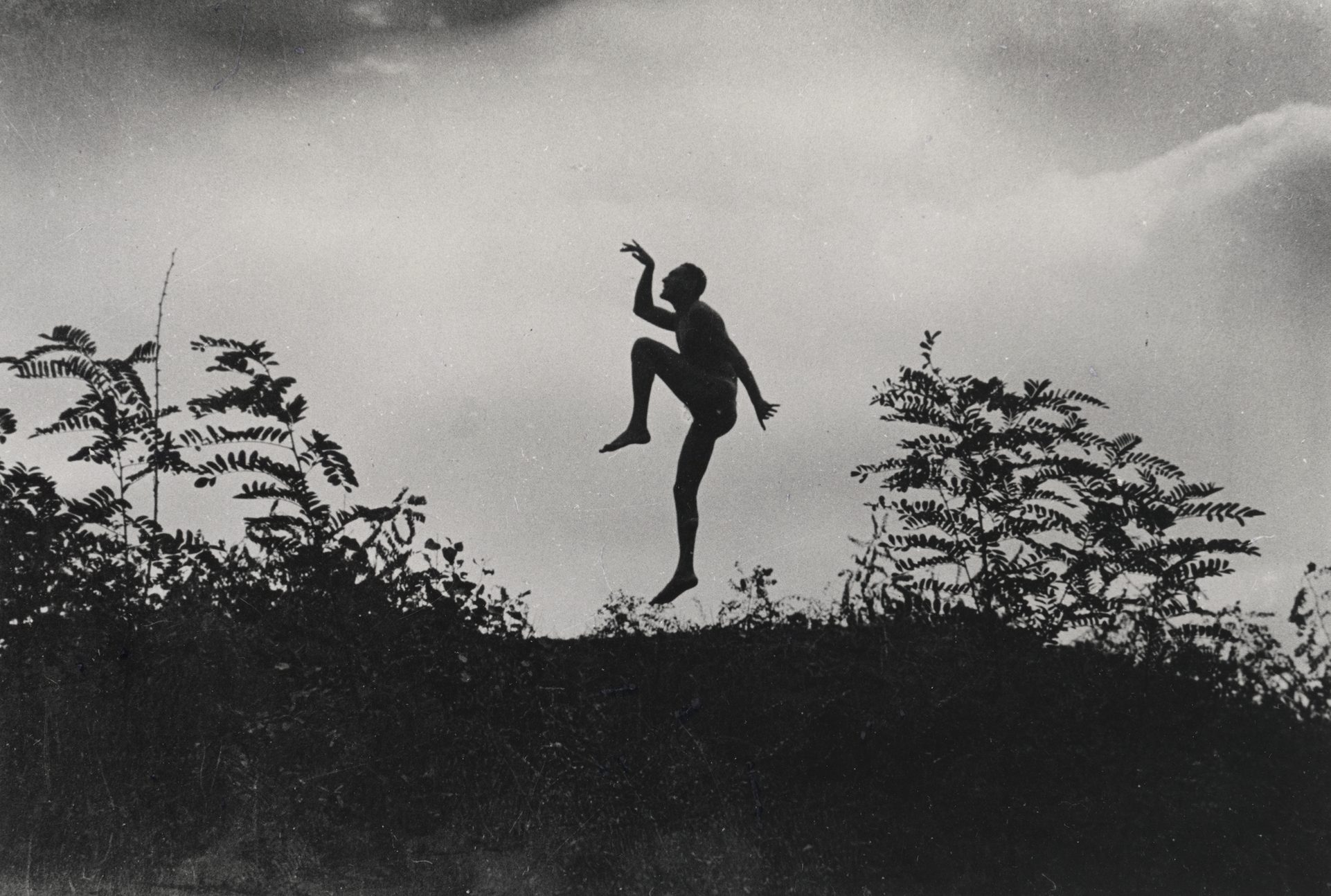
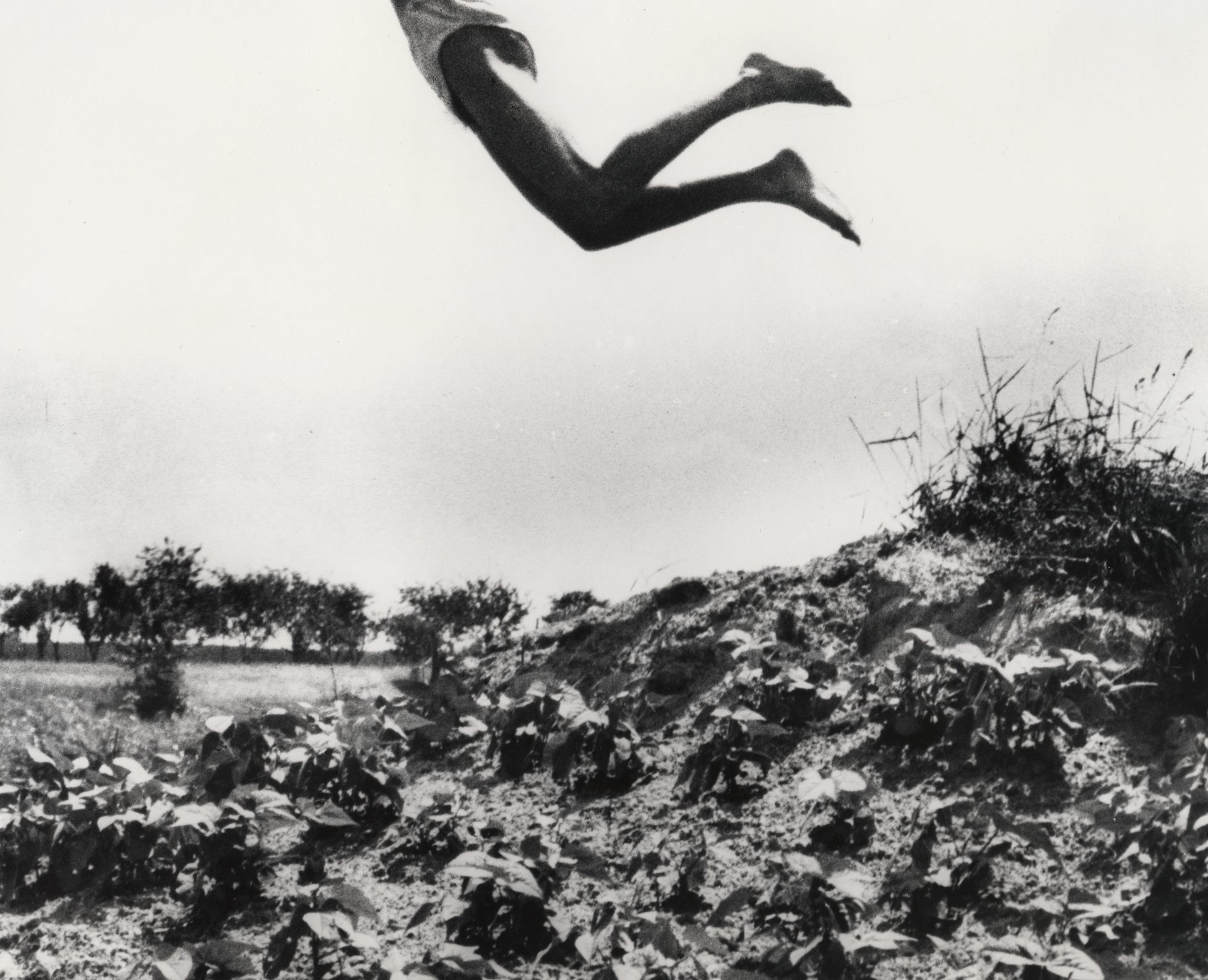
For André Kertész, life close to nature and the accompanying sense of freedom were primarily associated with Szigetbecse and Dunaharaszti, from his childhood until his emigration to Paris in 1925. He looked upon these places and experiences as a ‘pure source’ which he could draw from throughout his life. This was where his nude compositions attained their sophisticated subtlety, reflecting harmony between man and nature—something that the generation that fought in the First World War was consciously aspiring for. With his brother, Jenő acting as the model in most cases, these photographs glorify the body against destruction, celebrate life over death. Kertész always found the poetry in a given situation, though he sometimes undertook purposeful and meticulous planning for the sake of an image, instructing and posing the model when necessary. This group of photos is marked by humour, irony and abandonment, and there is a sense of experimentation and the joy of discovery.
All three brothers had athletic builds, thanks to their love of exercise, especially running and swimming, while his two brothers were also excellent fencers. Nor were the cult of the body and a conscious pursuit of a healthy lifestyle alien to the artistic circles of the time. The artists of the Szőnyi Circle, who were among Kertész’s friends, had a fondness for the subject of nudes in Edenic natural settings. There are several nudes among the photographs donated to Szigetbecse, which gain further nuance from those that have been preserved in the French archives and that spotlight Kertész’s boldness in constructing the image. They also demonstrate that, even before his time in Paris, he considered it obvious that painting and photography were of equal status.
Reflections
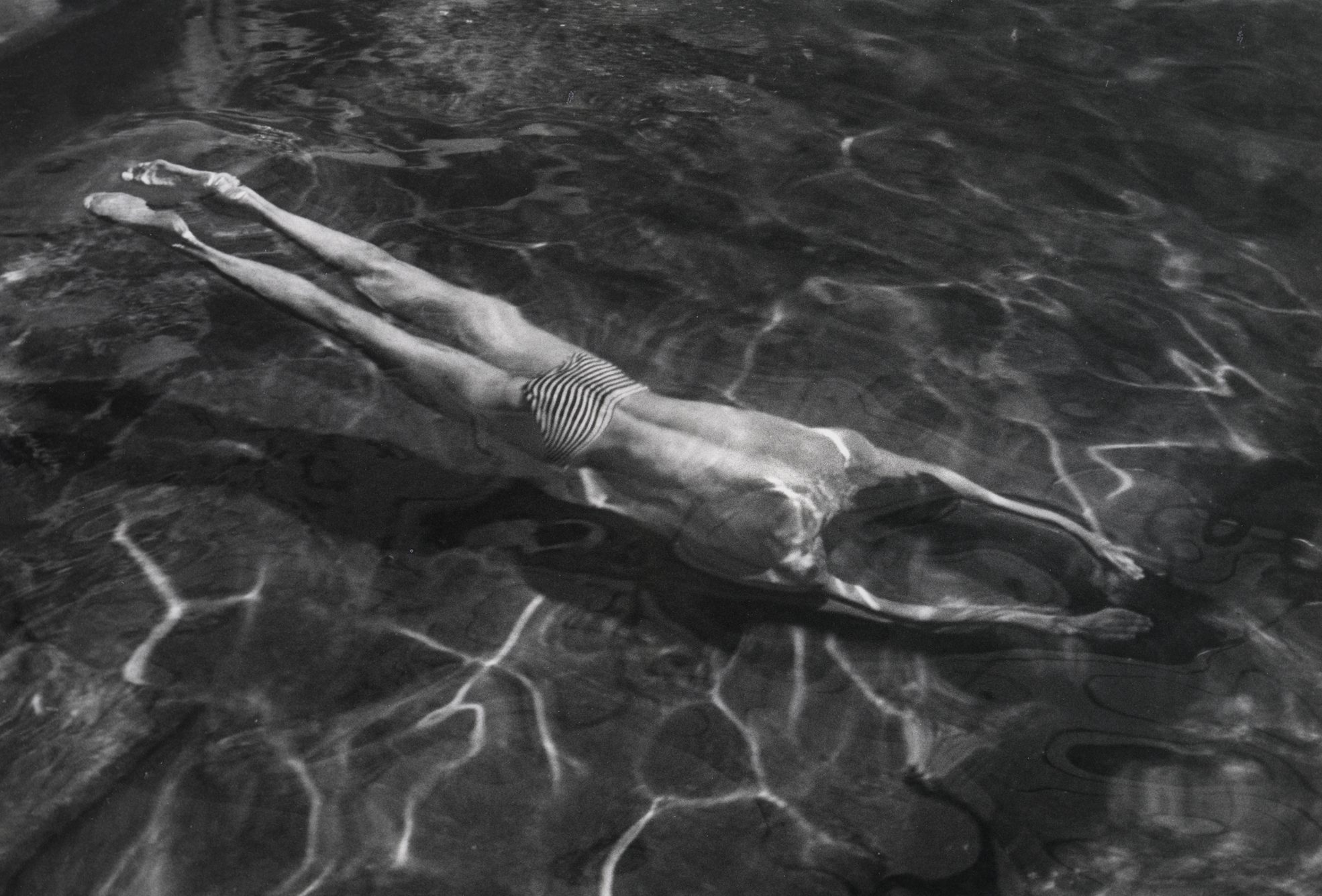
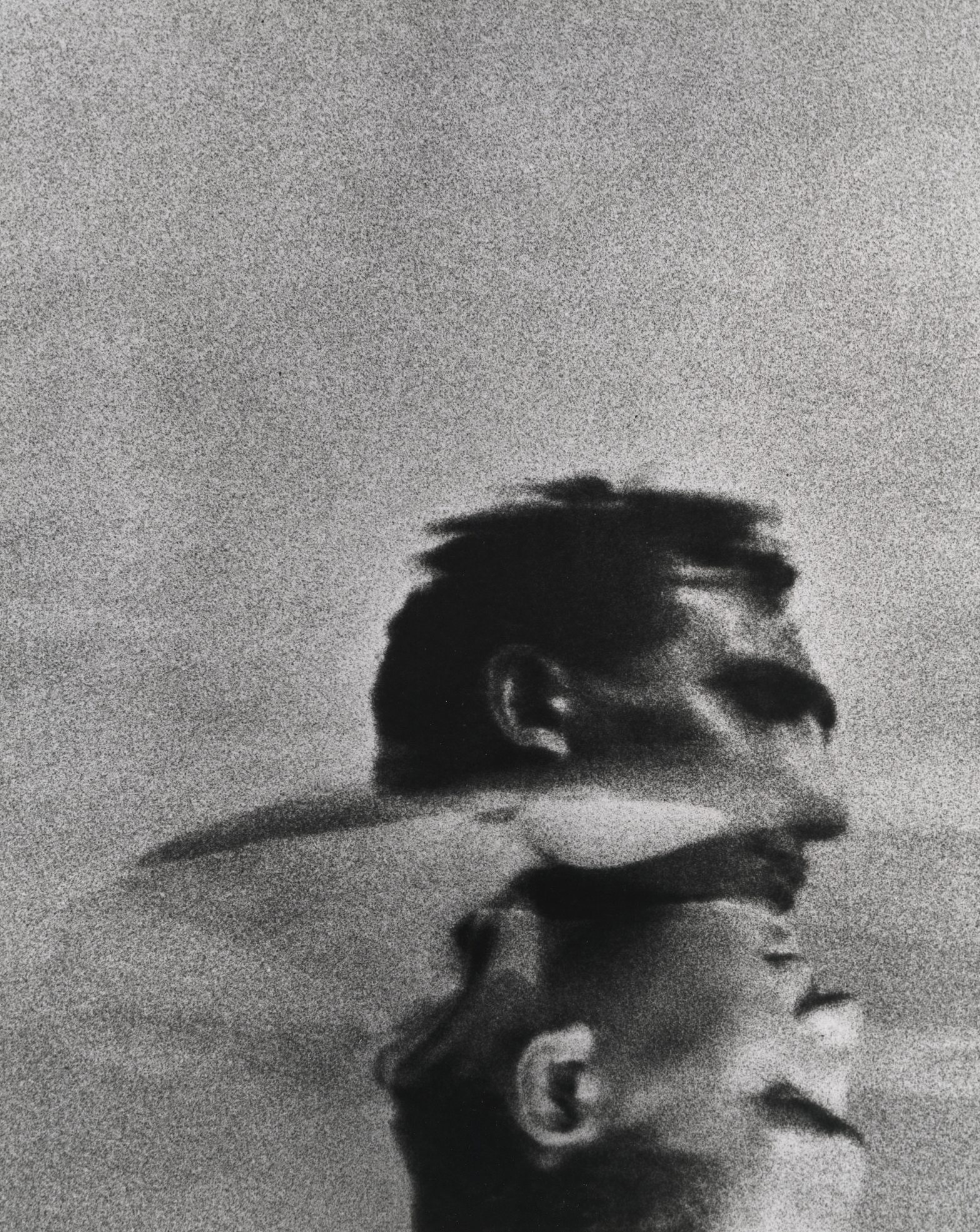
As a soldier convalescing in Esztergom, he frequently visited the Mala swimming pool. This was where he took Underwater Swimmer, a photo considered a highlight of the oeuvre, a testament to his fascination with the play of the reflective and distorting effects of water. He was intrigued by this found motif and idea for years, and he would return to them in various forms. Reflection is a portrait of his brother, taken in Dunaharaszti Visszatükröződés and enlarged upside down; the portrait of Ida Rubinstein that is paired with it shows the dancer’s face doubled in a mirror.
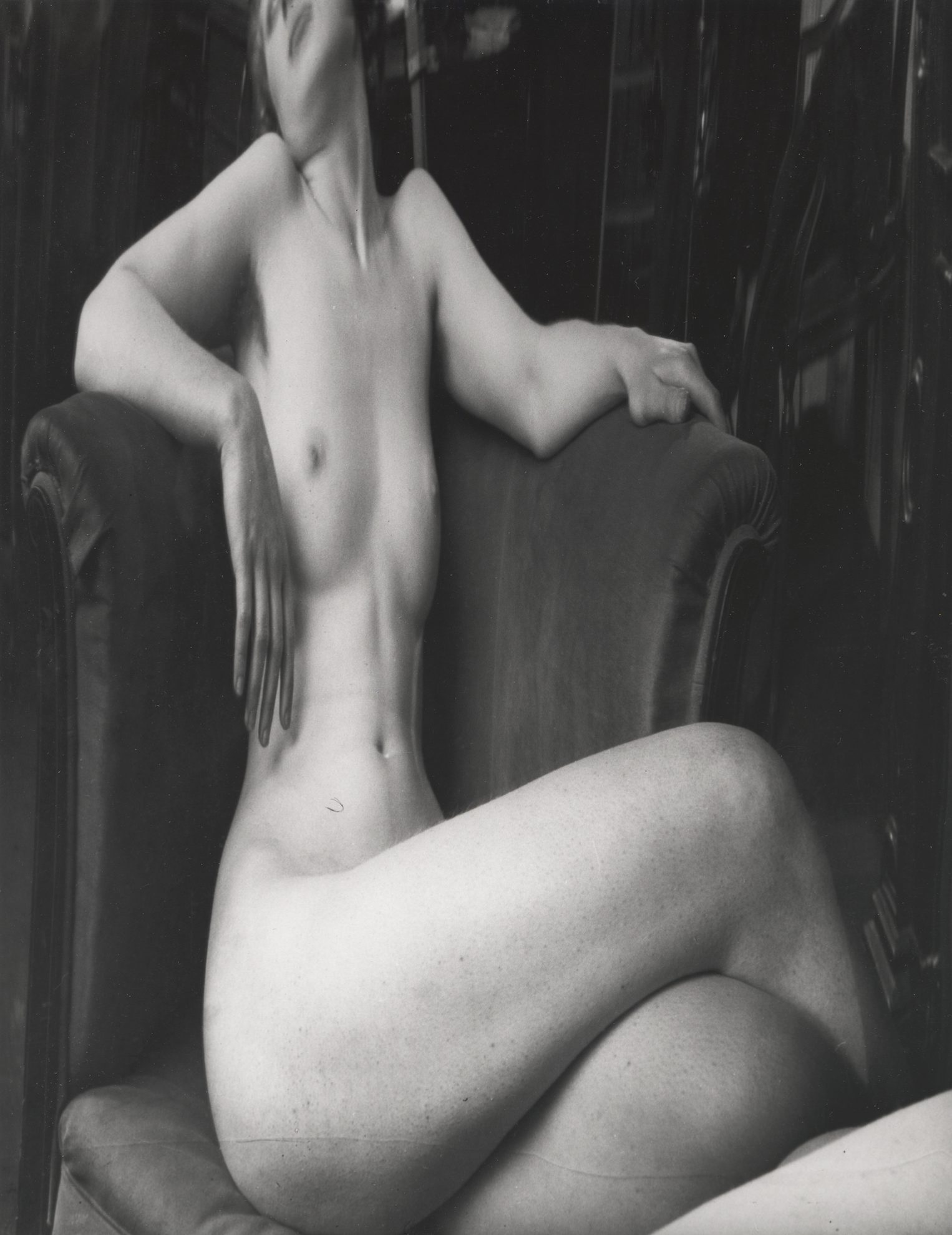
Párizsban 1930-ban készíti eIn 1930, in Paris, he took a series of portraits of Carlo Rim, the new editor of Vu magazine; spirits were high during the shoot in the amusement park, and Kertész luxuriated in the playfulness of the mirror that distorted the personality and the view. These lessons were to inform the nude series, Distortions, which was commissioned in 1933 by Le Sourire magazine, and became an unconventional work that shares
characteristics with avant-garde and surrealist art. For four weeks, he lived under the spell of the distorting mirrors in the amusement park and the nudes, taking nearly 200 shots of the two models with his Linhof, often including himself in the mirror. He had already planned to publish the series in book form in 1936, but the album did not see the light until 1976.