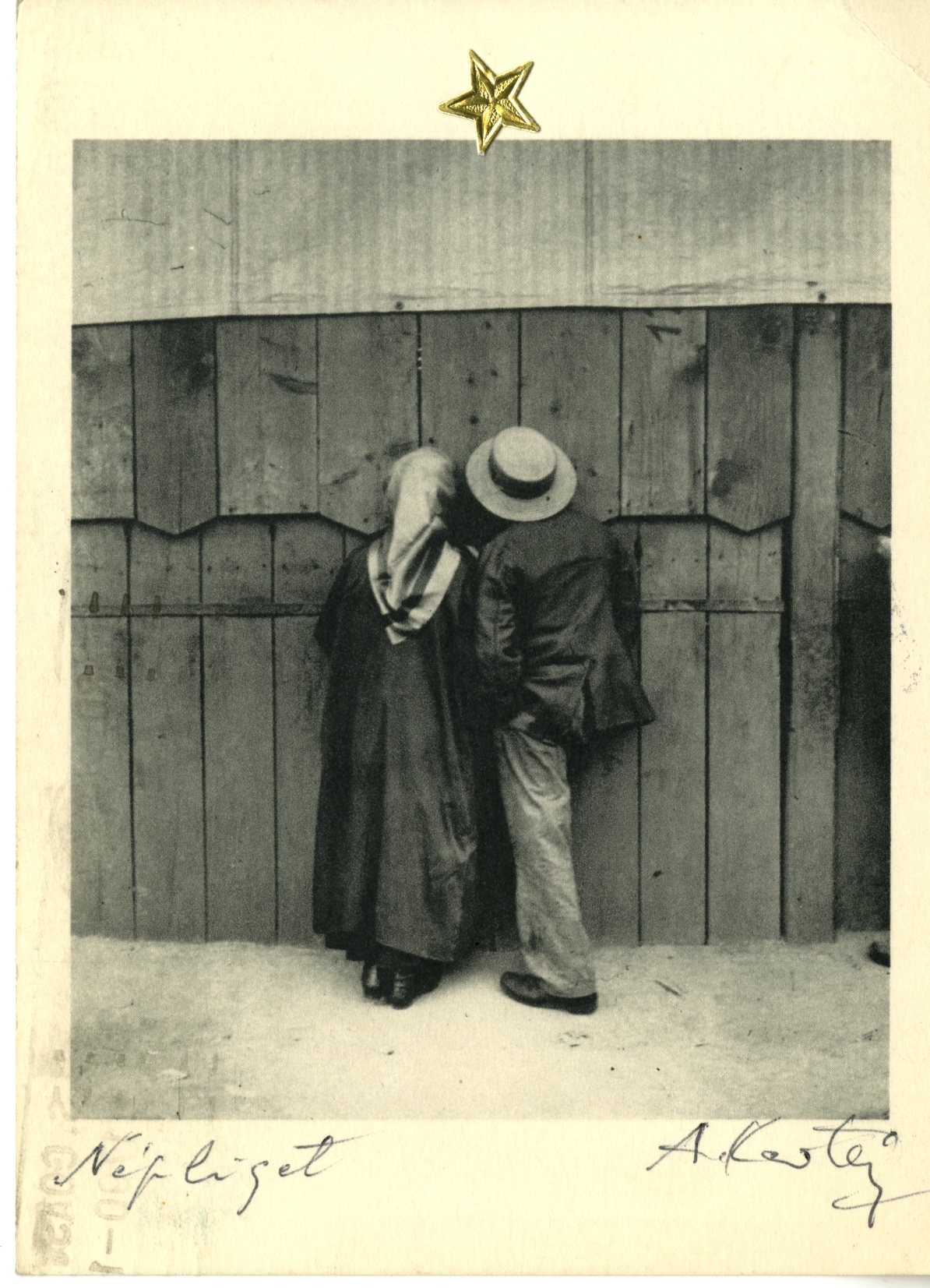
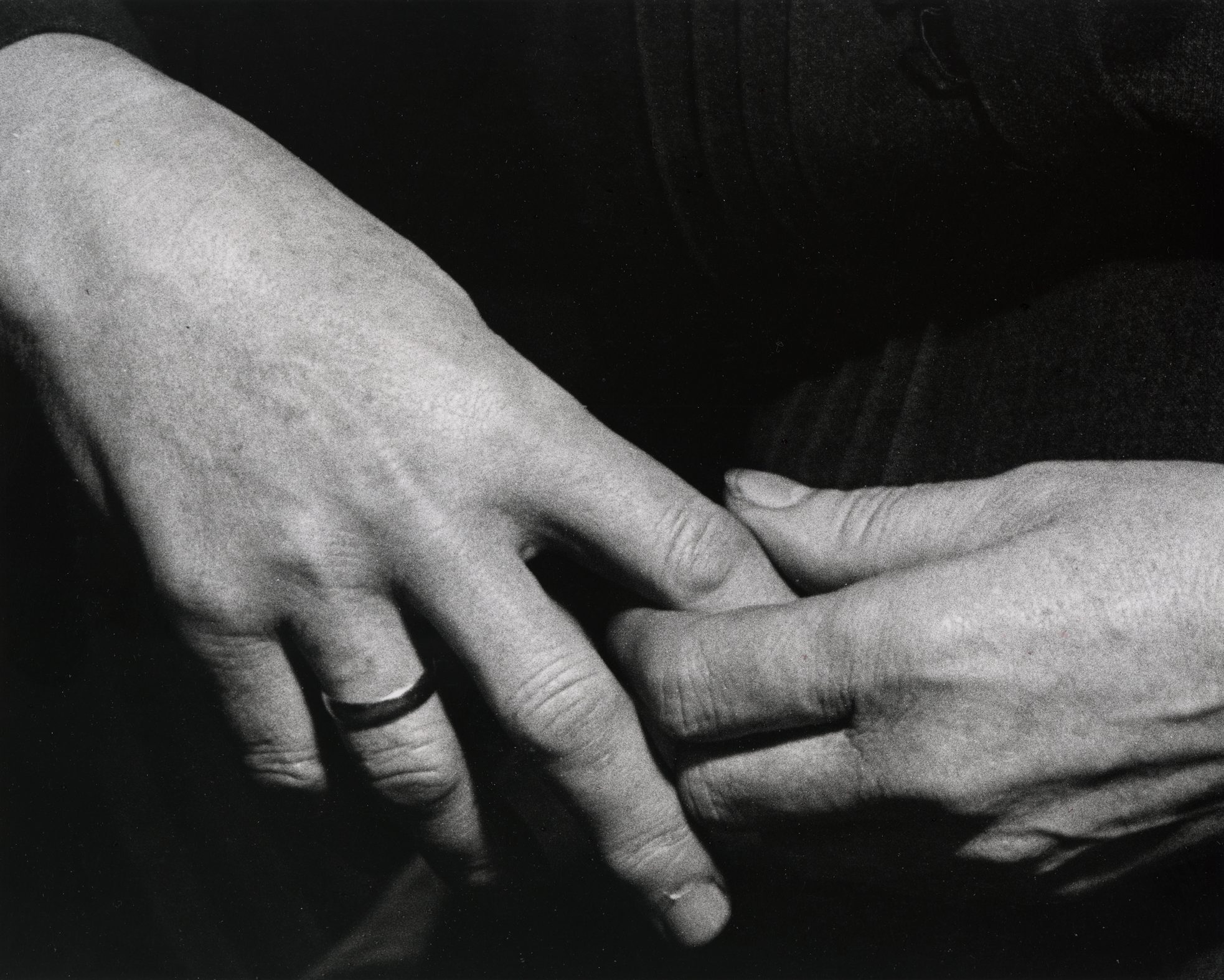
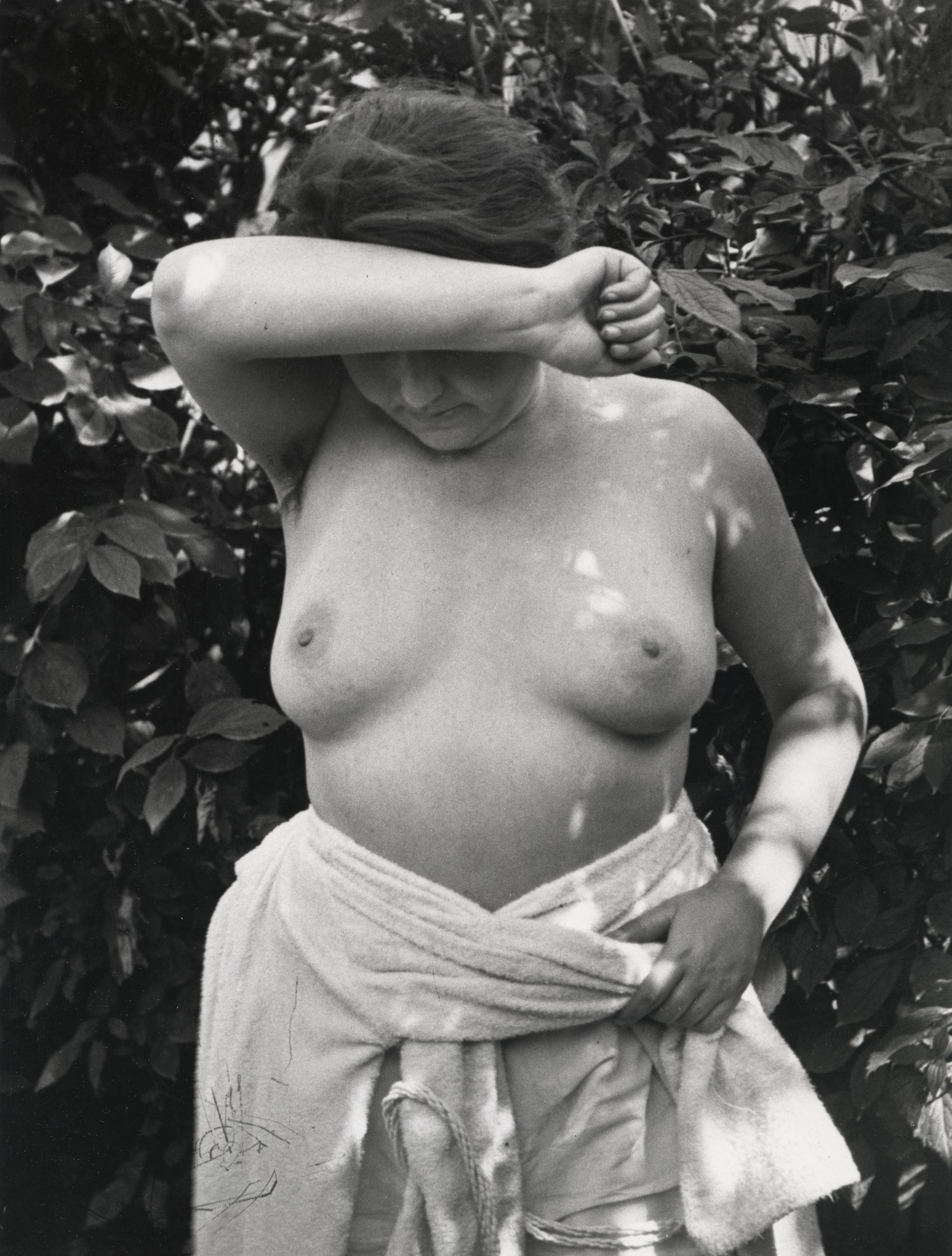
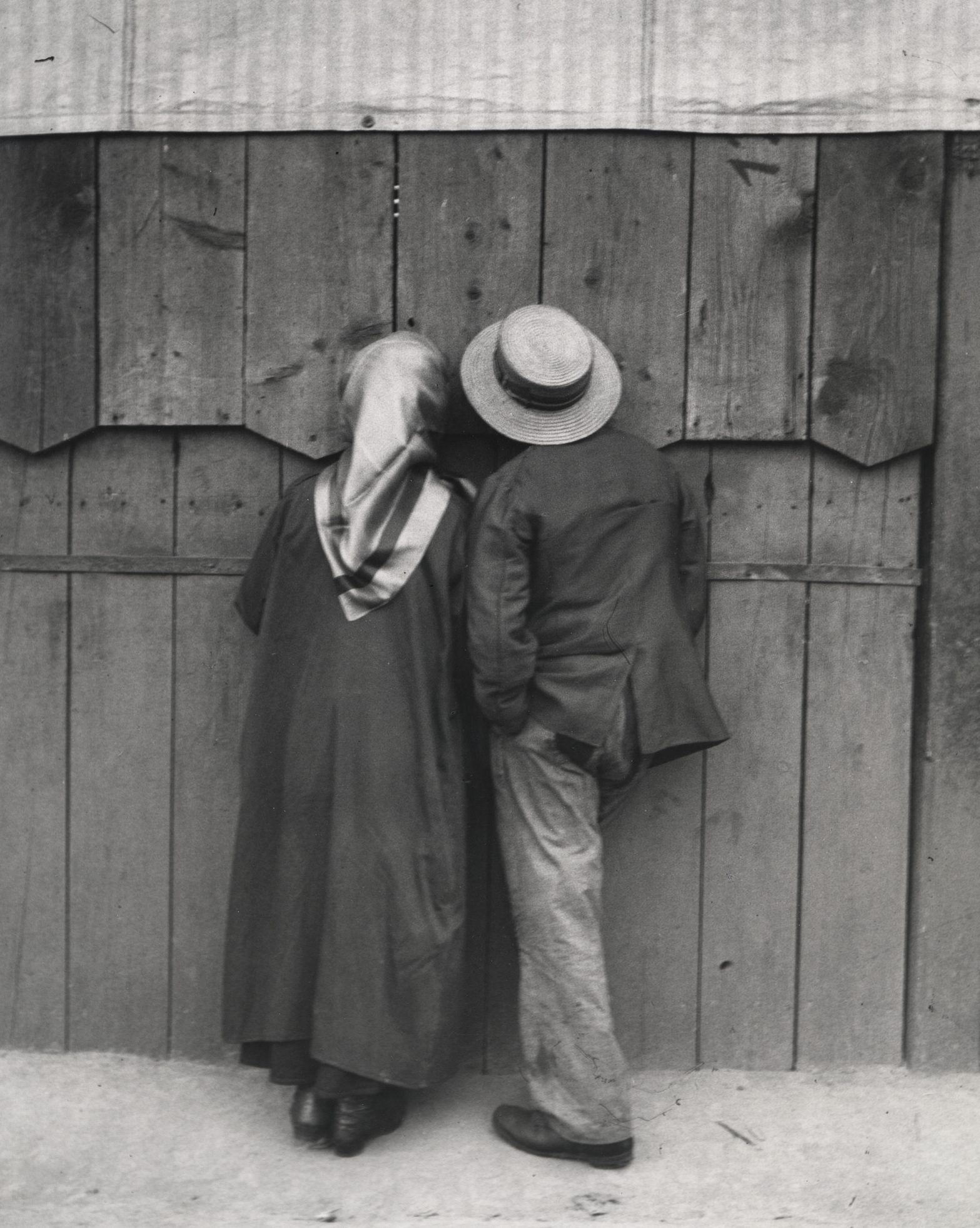
While fairly unenthusiastic about his school duties, André Kertész was open to many things, and was particularly interested in literature, theatre and the visual arts. He quickly progressed beyond the role of the lover of art, and took on an analytical, critical attitude. However, in the 1910s he found a medium for self- expression that was becoming more and more widely available and that he could explore and shape to suit his own vision. In 1912, shortly before graduating from grammar school, he and his brother Jenő were presented with a camera, and he embarked on the process of experimentation, observation and interpretation that was to become his vocation. In the expanding scenes of his life, his subjects were the small gestures of chance that arrested his attention and sensibility: the intent expression of a musician, the dreamy face of a sleeping boy, or the devotion with which young lovers turned to each other. He showed a flair for composition early on, and his tautly structured view of Budafok is in accord with the period’s endeavours in geometric painting. In Mother’s Hands, the bold framing focuses the attention on the detail he considers important, just as the Abony Nude’s shy gesture makes the image go beyond the customary nudes of the time. Several of the early photos have become canonized masterpieces of the international history of photography; his Circus (Outside the Circus in the People’s Park), for instance, was published forty-five years later as a postcard by New York’s Museum of Modern Art.
André Kertész's postcard to Margit Kovács with a photo of André Kertész