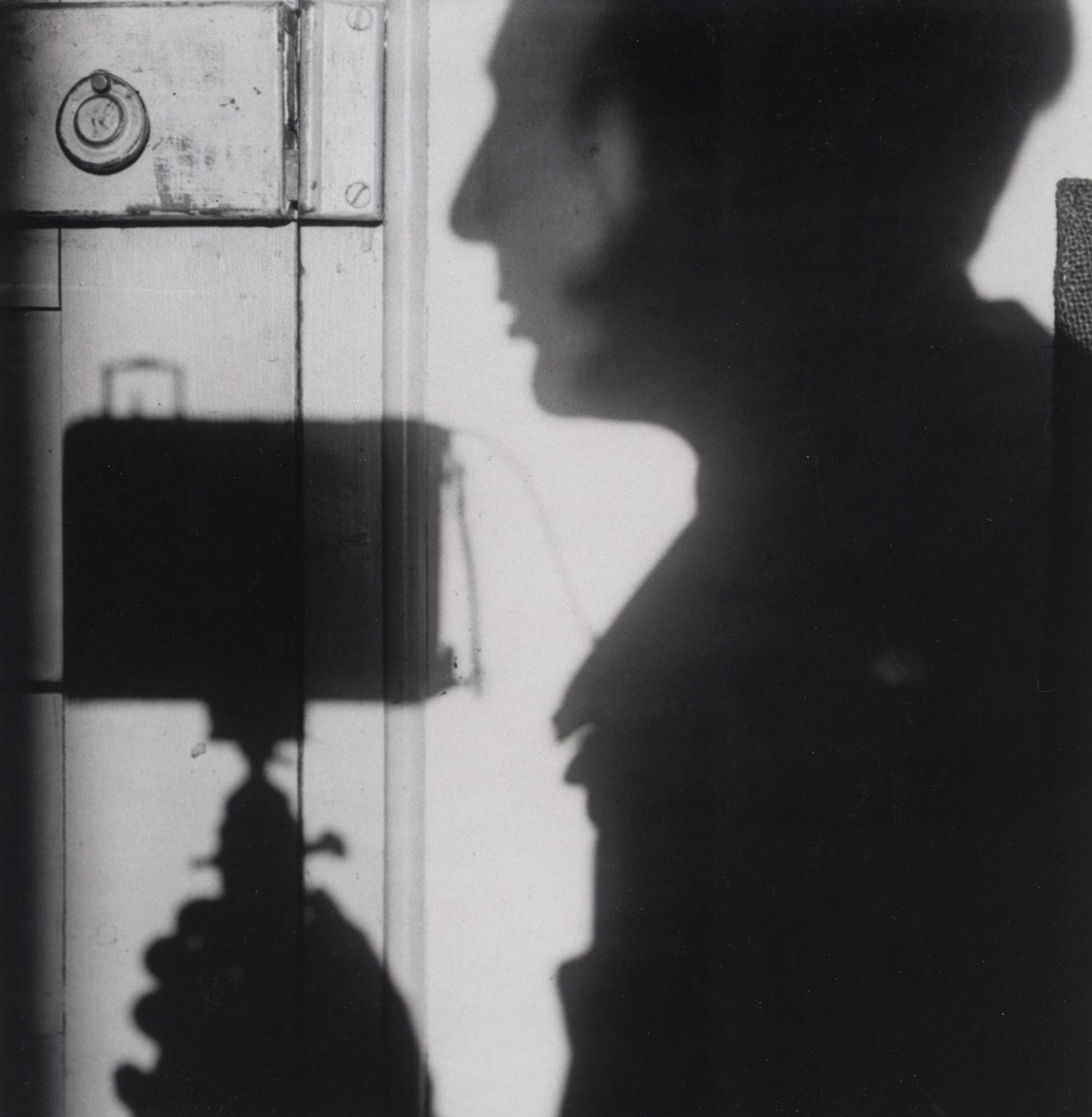
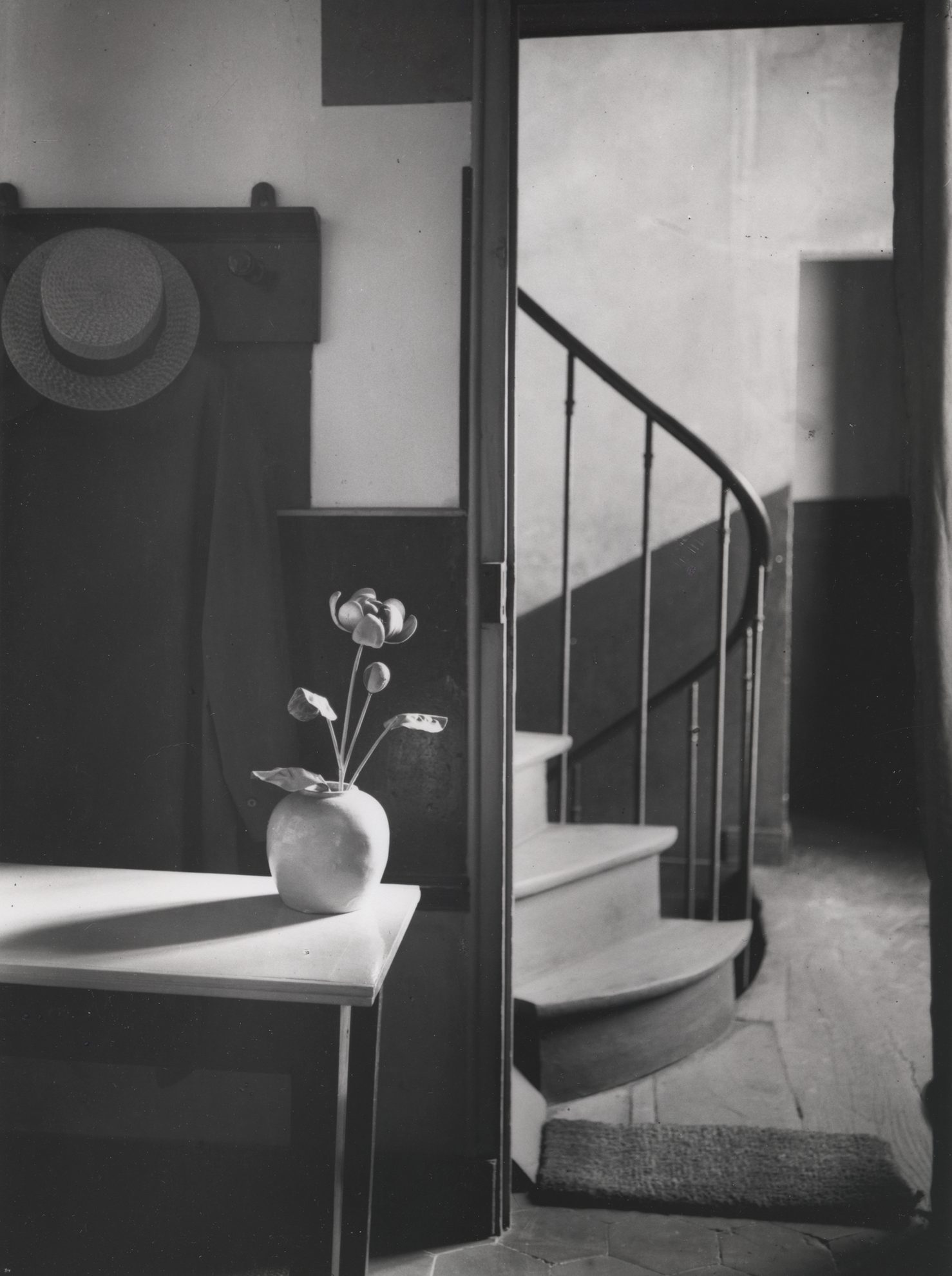
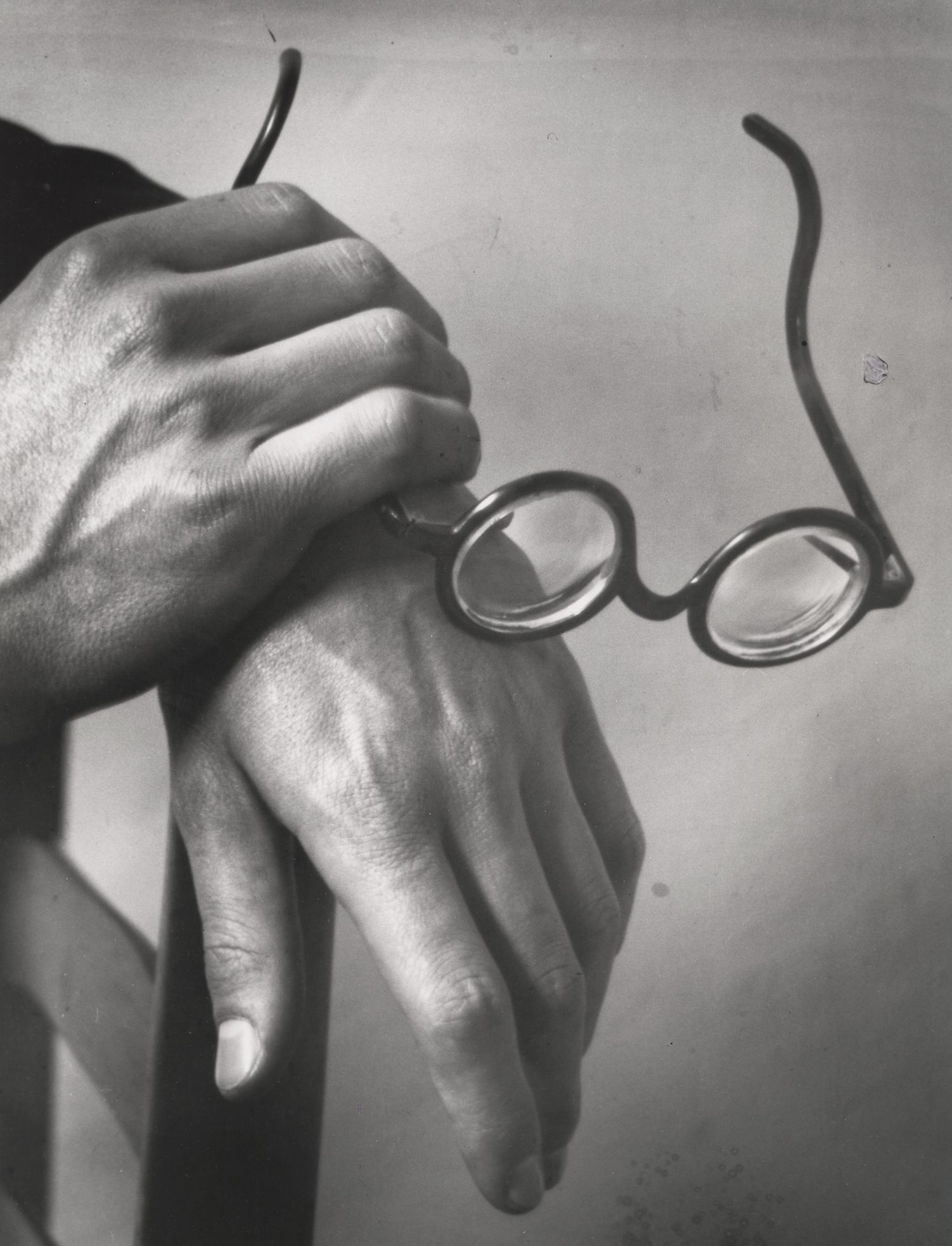
André Kertész was thirty-one when he arrived in Paris in 1925 with great ambitions, some savings and a camera. At the time, artistic life happened in and near the Montparnasse Quartier, in its cafés, cramped attic rooms, studios and small galleries. With Kertész, the émigrés of the Budapest art scene—painters, sculptors, puppeteers—were joined by a self-confident photographer who was convinced that photography was an autonomous art and not inferior to any other branch of the visual arts. Kertész always had his camera with him, whether he was at some gathering in a studio, with the celebrating Futurists, at a table in Café du Dôme, or when he was wandering around the squares and parks of Paris. He made carte postale prints of his photos at this time, so that they could be easily circulated and initiate an active interaction. He used these small, signed prints as gifts, business cards and postcards, which he sent to his family back in Hungary, informing them about his life in Paris and his photographic achievements. In 1927, Au Sacre du Printemps, a gallery owned by Polish pianist and composer Jan Sliwinsky, presented an exhibition of his works, including several portraits (Tristan Tzara, Paul Dermée, Mondrian, Seuphor, Mihály Károlyi), as well as two tautly structured views of Budafok—by way of a counterpoint, as it were, to the new path of photography he had started to follow. One of the photographs in the exhibition showed wire sculptures by the German artist, Hilda Daus, one of whose works Kertész would keep for the rest of his life. Along with the portraits, there were genre and street scenes from Paris, and what is perhaps still his best-known work, the iconic Chez Mondrian was also on view. Paul Dermée’s programmatic poem about André Kertész was read out at the opening, which aptly and acutely identified his place and role in photography. Also recited was a surrealist poem by Attila József, who was in Paris at the time. The exhibition demonstrated Kertész’s extensive network of connections, his familiarity with the Parisian avant-garde, which included the greats of art from Chagall to Brancusi, while female icons of the period also made regular appearances, among them the writer Colette, the model Kiki de Montparnasse, the photographer Berenice Abbott, and the fashion designer Coco Chanel. The exhibition brought him reputation, which in turn would secure him further opportunities. Soon his photographs were published in some of the most important European periodicals, such as Cahiers d’Art, Die Dame, Art et Industrie and Das Illustrierte Blatt.
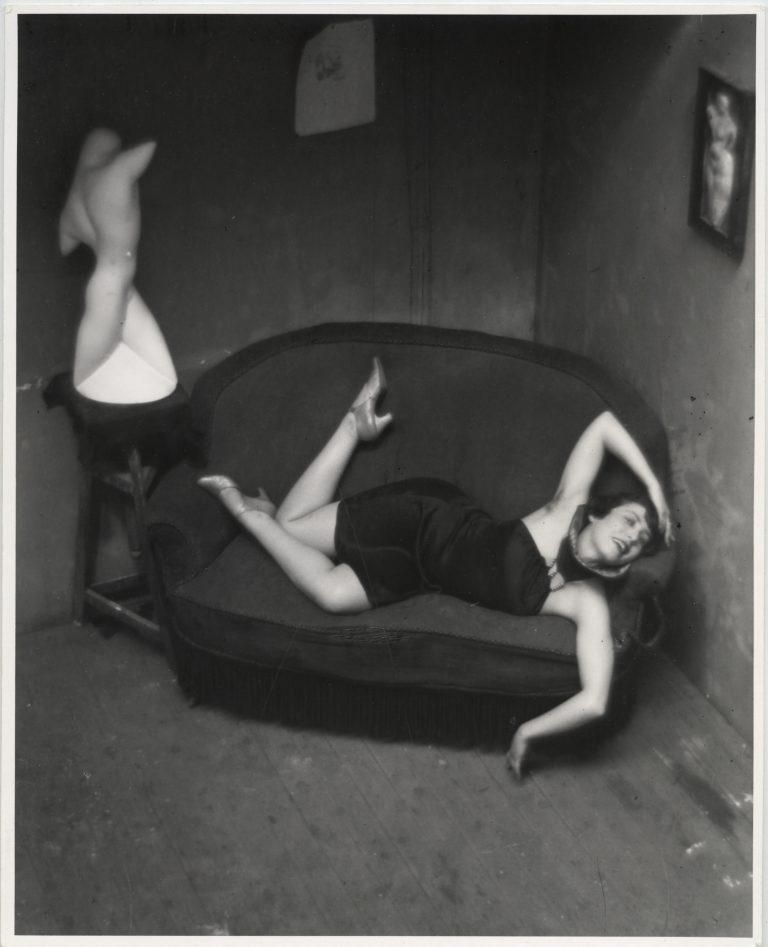
Satiric Dancer
The model of André Kertész’s iconic photograph was Magda Förstner, who initially studied classical ballet,
but around the age of twenty took an interest in Isadora Duncan’s ‘freestyle movement art,’ whose Hungarian practitioners included Olga Szentpál, among others. In 1926, she performed in the chamber hall of the Academy of Music. The reviews were appreciative of her talent: ‘She strives to express her feelings not only with the movements of her arms and legs, but with almost every muscle of her body, and she enhances the power of her movements with an intense play of features.’ In 1927, she performed at a gala evening in the main hall of the Sorbonne. It was during her time in Paris that André Kertész photographed the young dancer both on her own and in company. In one of the photos, Magda is sitting at a table in the studio of sculptor Etienne Beöthy, with Rogi André, Kertész’s first wife being one of the other two people she is with. She also appears in another group photo, where the mood is more relaxed, and she laughs freely alongside Etienne, while Rogi André plays the violin for the group; in others, she can be seen posing in men’s clothing or grotesquely frozen in a pose of yawning. Of all the photos taken of her, it is only Satiric Dancer that has become an iconic image of photographic history. In this photograph, the young woman can be seen in Beöthy’s studio, next to his sculpture, Action Directe, in a posture that mimics the work. ‘She just made a movement,’ wrote Kertész in his memoir. ‘I took only two photographs. No need to shoot a hundred rolls like people do today. People in motion are wonderful to photograph. It means catching the right moment—the moment when something changes into something else.’ The second photo he mentioned shows the dancer sitting, with her legs in a charleston pose. Over time, Magda has become a symbol of the independent, liberated, creative woman, who is not a passive model but a partner to the photographer: it is her gesture that creates the perfect composition and a harmony between sculpture, dance and photography.
Kertész was committed to capturing movement art and dance. The Bobino, the variety theatre in Montparnasse was a favourite haunt, where among others, he photographed Clayton Bates, the step dancer with an artificial leg. In 1928, he photographed Ida Rubinstein’s dance company for a photo feature in Vu magazine. Peruvian dancer Helba Huara was another one of his subjects, and when he visited Hungary in 1935, he went to take photos at Olga Szentpál’s school. He continued to be interested in classical and modern forms of dance even after his emigration to the United States in 1936. In the 1940s, he photographed Miriam Winslow and Foster Fitz-Simmons for the promotion of Satirical Dancer, the Broadway production that featured them, and there is a surviving series with ballet dancers, whom he photographed in 1940 on the fire escape and terrace of the Rockefeller Center and in an amusement park.