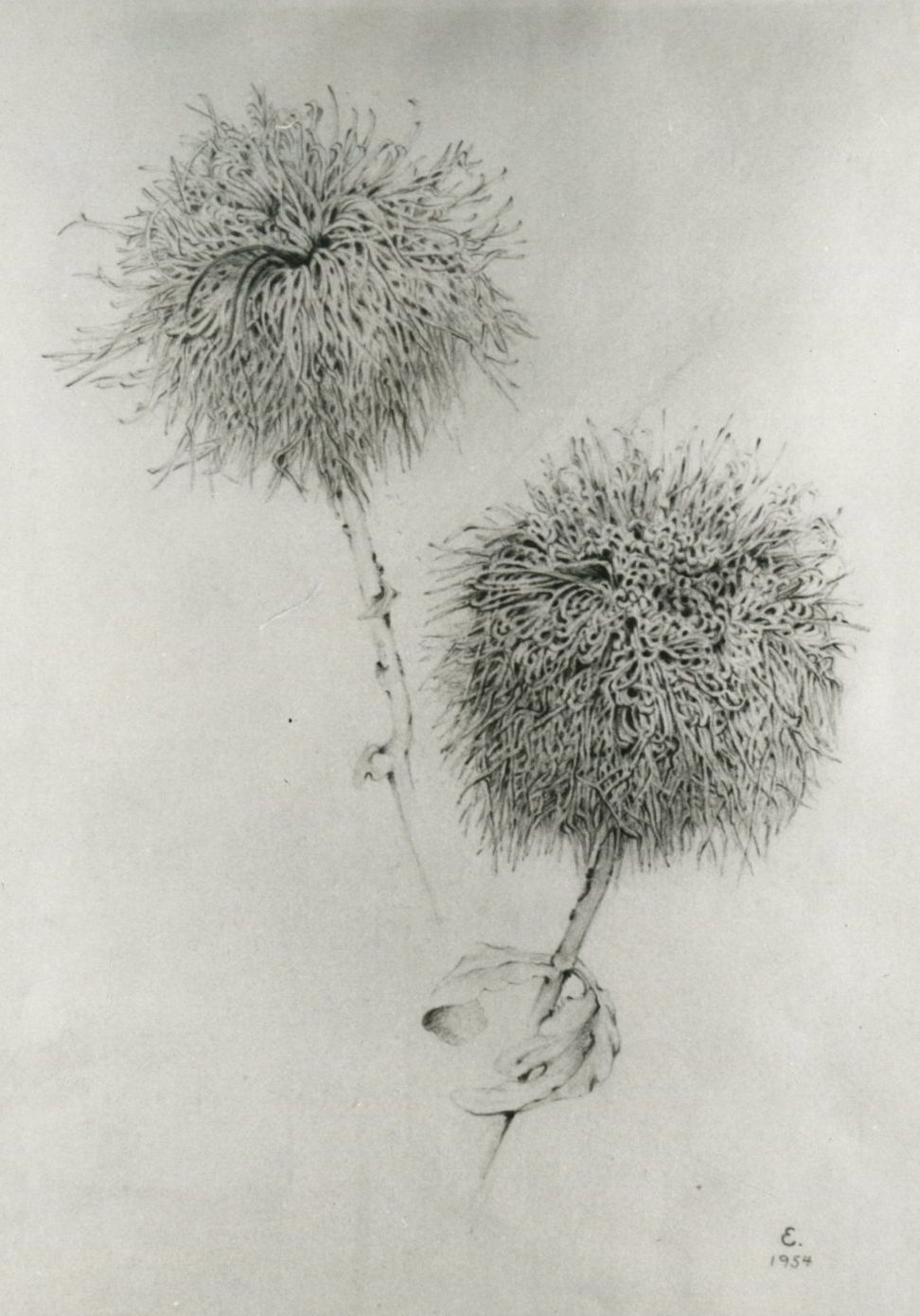
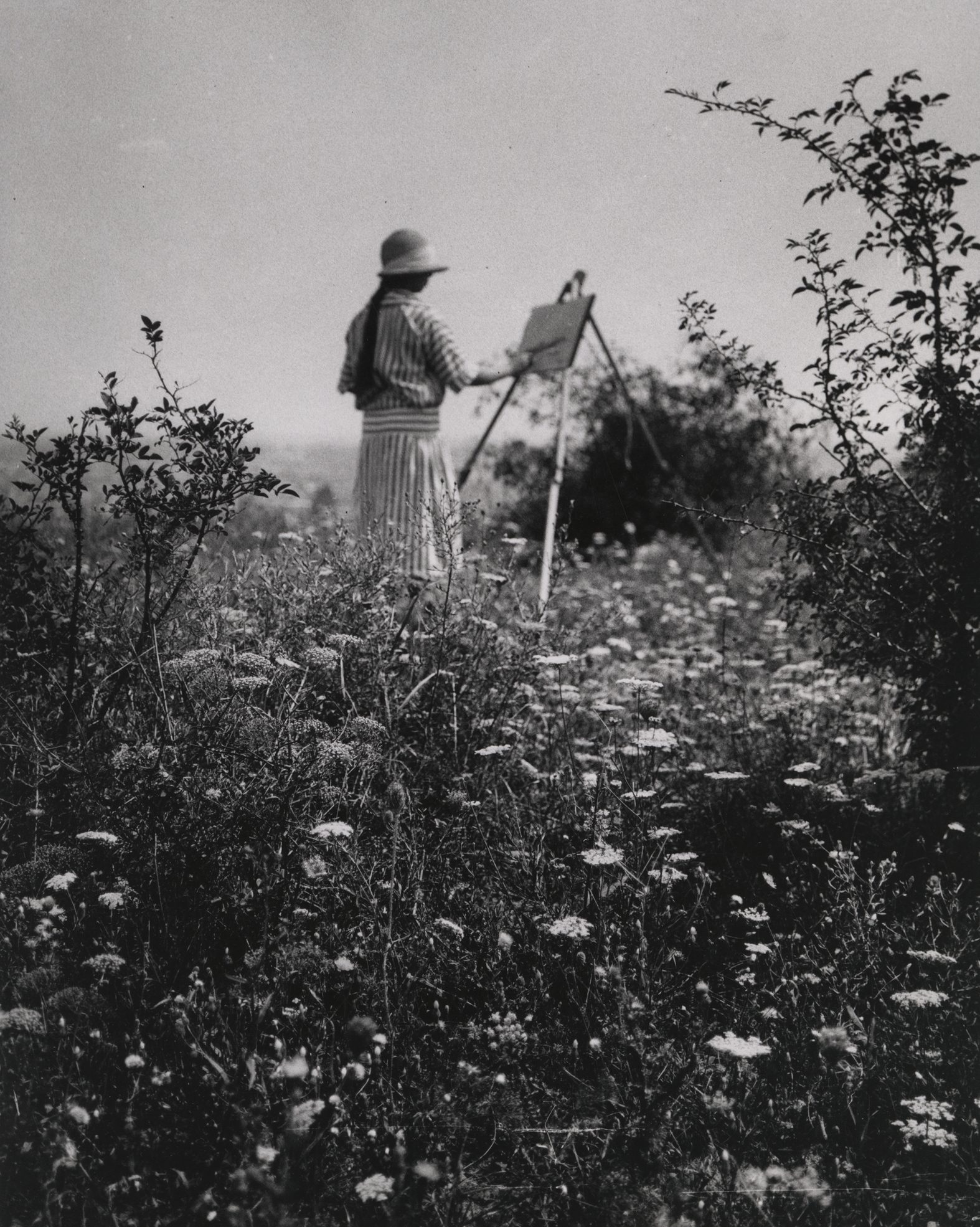
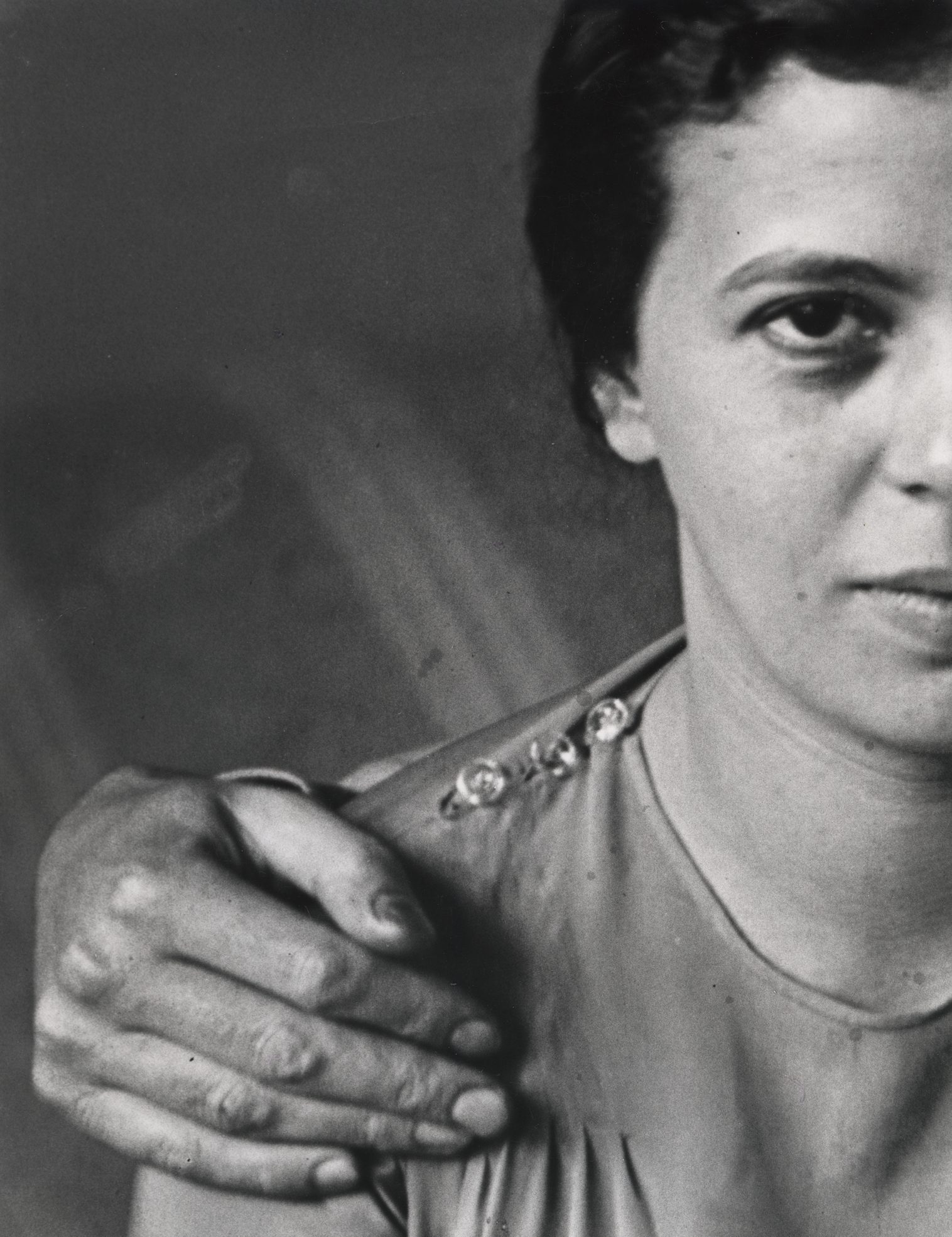
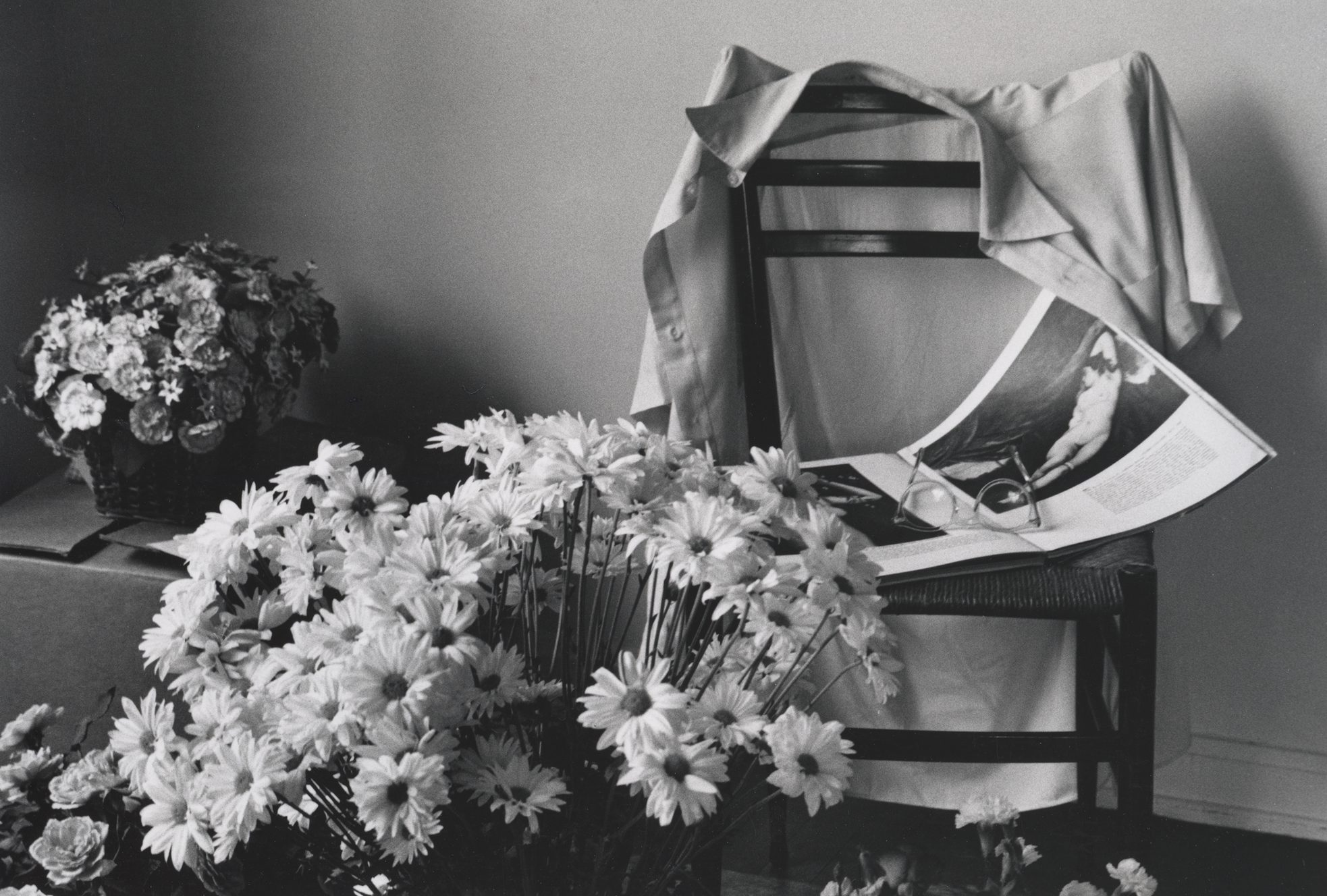
As a consequence of his worldwide fame, the life of André Kertész is known in great detail, with numerous studies, articles and essays devoted to his character, the turning points of his life and the backgrounds of his works. At the same time, our knowledge of his companion, love and wife, Elizabeth Salamon, is very fragmentary. She was born on 6 July 1905, in Teszér, into a family of railwaymen, and lived in Budapest in the 1910s. Growing up with her siblings, the young girl attended Álmos Jaschik’s painting school, and at the age of fifteen, she took a job after school at a financial institution, the Budapesti Giro- és Pénztáregylet. This was where she met Andor Kertész, a clerk eleven years his senior, who was a war veteran and who devoted all his free time to photography. Kertész captured Elizabeth in countless photographs from the moment they met, and in one he took in September 1919—shown at the exhibition—the teenage girl can be seen in a white dress, standing among flowers in the countryside, painting. There is a special group among the photographs depicting Elizabeth: in these double portraits André Kertész can also be seen, close to her or embracing her, turning towards her with an adoring gaze. Few of Elizabeth’s portraits have been exhibited and published, i.e. canonized, and in most of those she is presented to the public in an abstract, symbolic, reserved manner. A picture of the couple taken in the early 1930s, in a Montparnasse café, on the occasion of their reunion in Paris, forms an exception to this rule, as does the iconic double portrait that marks the beginning of their life together and that Kertész reinterpreted in the 1960s by drastically reframing it. The photos selected from the French archives are private in character, and reveal the hidden side of their relationship. The first phase of their relationship lasted from 1919, when they met, until 1925, and was marked by the blossoming of romantic love. During these years, through Elizabeth, Kertész forged close friendships with the so-called Arcadia painters, Vilmos Aba-Novák, István Szőnyi, Erzsébet Korb, Pál Pátzay and Imre Czumpf. This social capital and his familiarizing himself with the artistic attitude and the principles of composition and construction proved useful during his time in Paris. In 1925, partly at Elizabeth’s encouragement and partly following his own ambitions, he emigrated to Paris; before he left, they became engaged, if not formally. In Paris, things took a different turn and in 1928 Kertész married the Hungarian painter and photographer Rózsi Klein (who took on the name Rogi André), whom he had met through common friends, including Etienne Beöthy, Lajos Tihanyi and József Csáky. In 1931 Kertész left his wife, and they divorced in 1932. By this time, however, Elizabeth had moved to Paris, and the two resumed their relationship, which was later formalized with their marriage in 1933. The photos show some of the couple’s intimate moments, and how they created a middle-class lifestyle for themselves in Paris. Elizabeth worked for Helena Rubinstein’s successful cosmetics company, and the knowledge she had acquired in Paris proved useful even after their emigration to the United States in 1936. A practical, business-savvy woman, she founded Cosmia Laboratories in New York with a partner, and while it consumed a lot of her time, it provided the couple with a stable livelihood. In her later life, Elizabeth could not fulfil her youthful desire for artistic expression, but we know from her correspondence with her childhood friend, ceramic artist Margit Kovács, that the desire itself never died, and she would occasionally take up the brush to amuse herself.