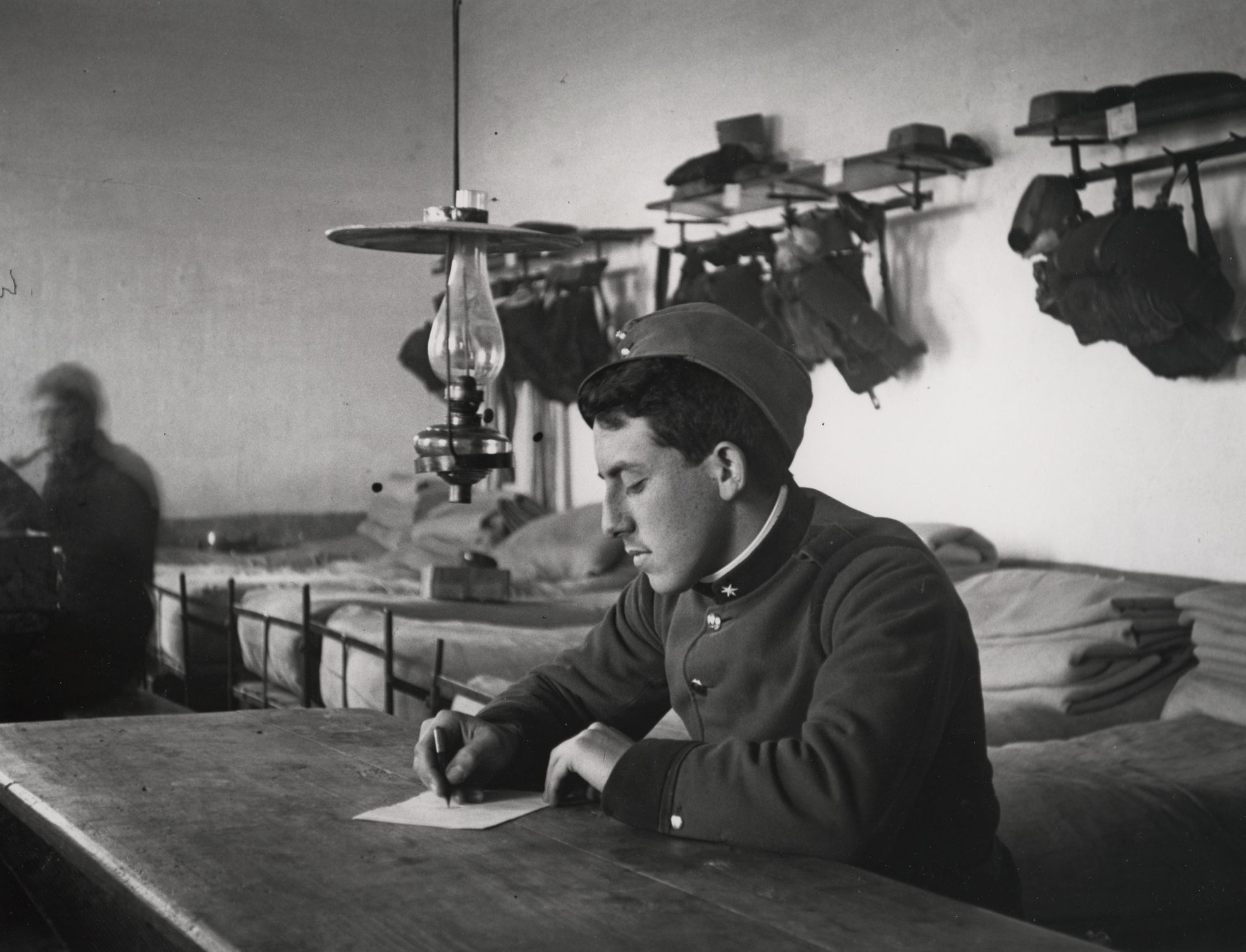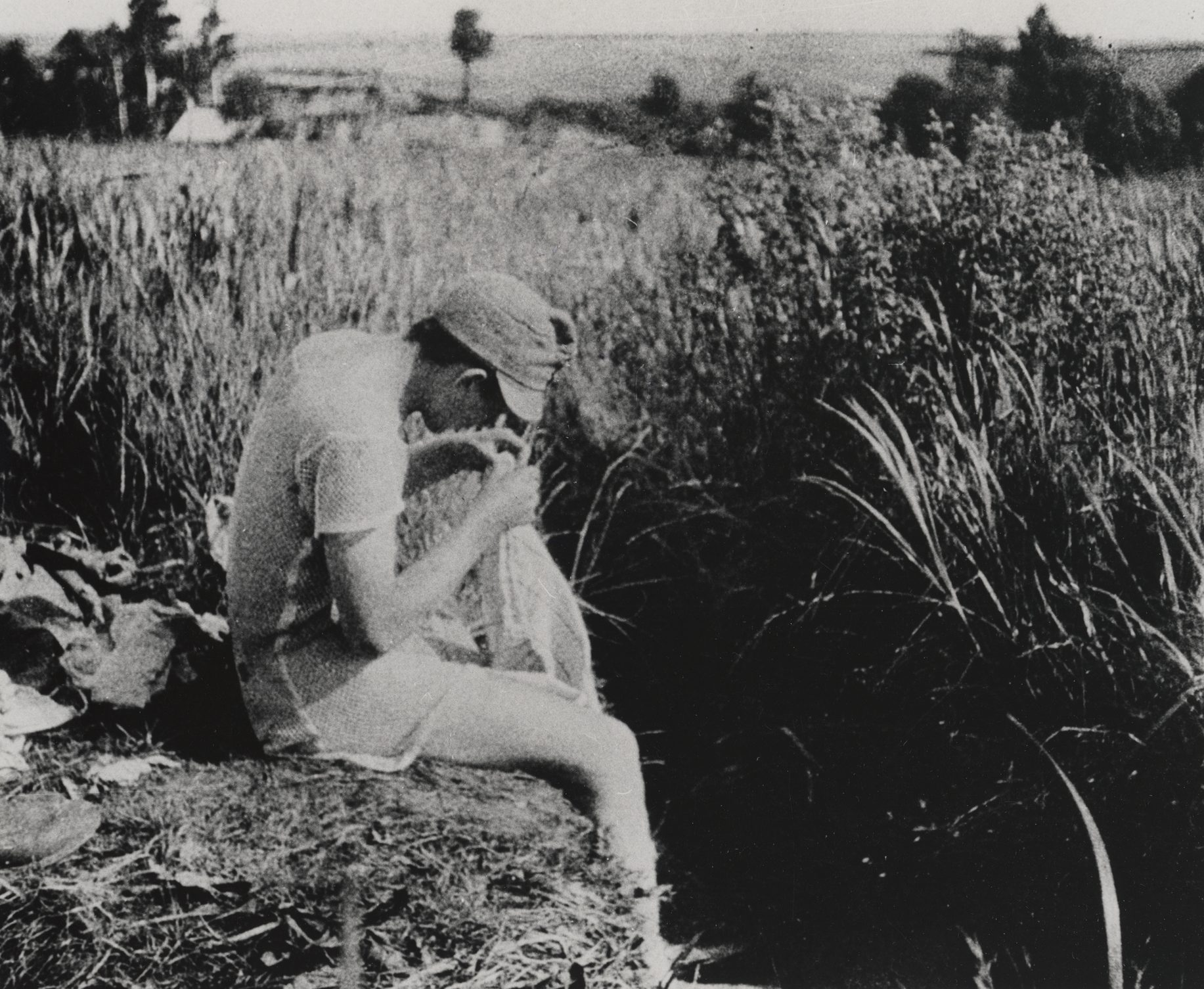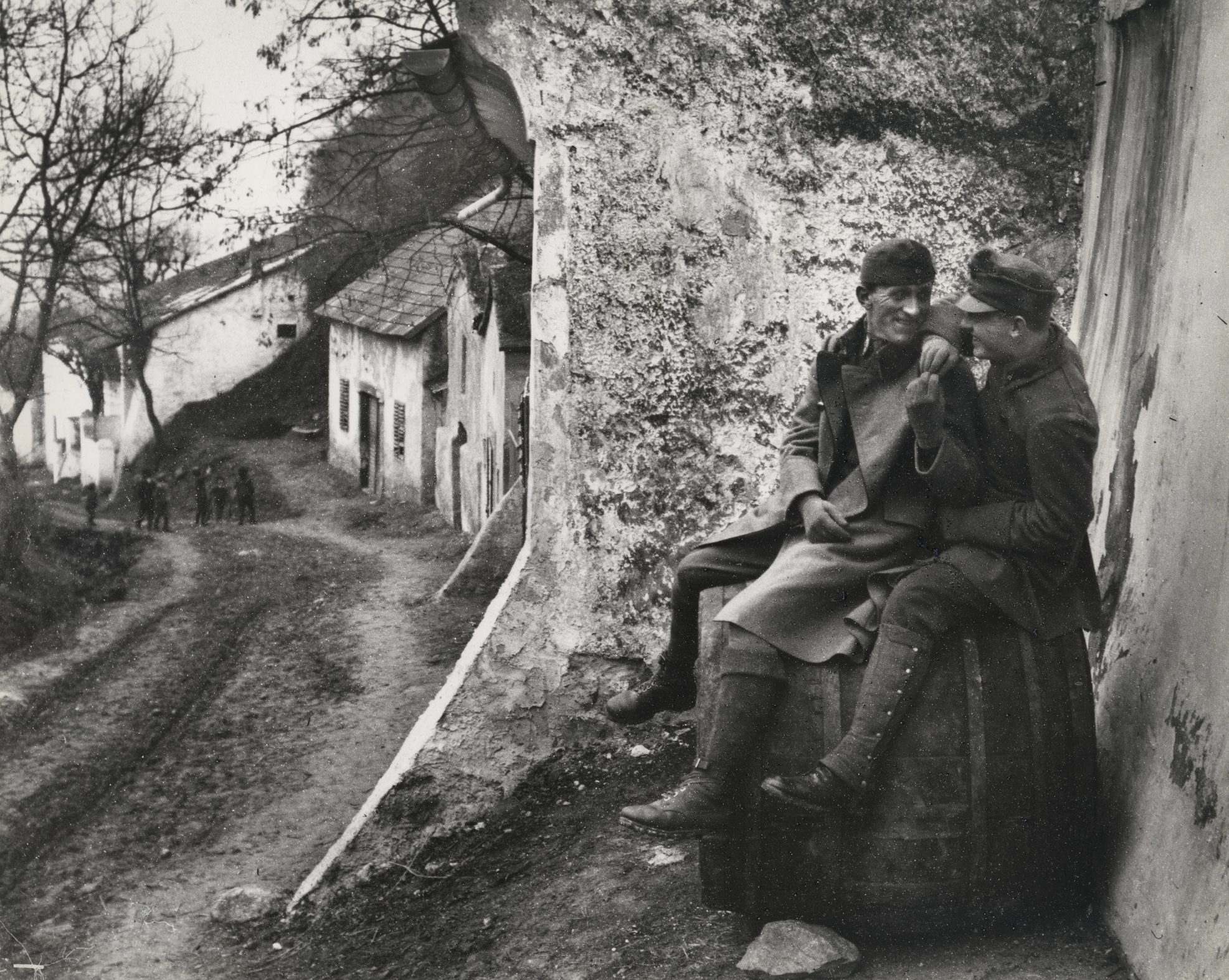
André Kertész was twenty years old when he was conscripted into the army of Austria–Hungary on 5 October 1914. He began to record his feelings and the occurrences of his days in a diary on 25 October, the day before he was sent to Klagenfurt for training. His first entry recounts the overflowing of extreme emotions, a love he wanted to end, the postponement of the need to face life, and seeing the army as a kind of escape. In November, training continued in Görz, and this was where took delivery of his new camera. He contracted typhoid fever in January 1915 and was hospitalized until the end of March. He then went to Esztergom, from where he left by train for the Russian front in June. He wrote twelve postcards and three letters to his mother in advance, because he wanted to conceal the fact that he was going to the front. In his diary, he wrote at length and with great sensitivity about family members as they said goodbye, and the emotional outbursts surrounding the departure of the troop train. As the train was travelling towards the eastern Carpathians, he reported on the devastation of war: blown-up bridges, burnt-out railway carriages, felled forests, trenches, roadside litter, and the worn-out, careworn local people. In addition to writing, Kertész also recorded his experiences in photographs. During the First World War, it fell mostly to journalists and front painters to report on the state of affairs, though there were official photographers as well, who took photos on the battlegrounds mostly after the action, using large cameras and tripods, usually concentrating on the destruction. Though not a war correspondent, Kertész was aware of the power of photography, and captured portraits of his comrades, their everyday life during the war and the dissonant landscapes, the bombed and looted cities—all he saw further behind the front line. Many of the pictures at the exhibition were taken in 1915, and they paint a picture of wartime reality that is quite unlike the official propaganda, with a soldier writing a letter, wounded fellow soldiers, infantrymen sitting on the field latrine, or a portrait of himself grooming for lice on the bank of a stream. Kertész made arrangements for the exposed photographs to be sent home from the front line to his brother Jenő, who was asked to make copies of them so he could give them to his fellow soldiers, and to make prints that could be submitted to newspaper competitions or be sold to periodicals. 1915. On 23 August 1915, he wrote two emotional farewell letters, addressed but never sent to his first love and to his mother, uncle and brothers, in case he was killed in action. In late August he was shot in the chest and his left arm became temporarily paralysed. However, as far as photography was concerned, the long recovery period was not an unproductive time for Kertész.